
Highlight Series #1
By Carol Garcia, Giana Vitale and Clara Malekshahi
In this series, the PSPDG blog team shares books, podcasts, or articles that we find interesting or relevant. We hope you enjoy these as much as we did! The blog team is open to suggestions and or submissions. Enjoy!
Mathematics For Human Flourishing by Francis Su
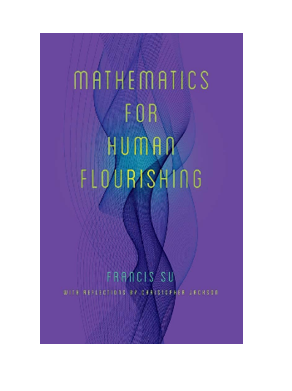
Have you ever wondered how mathematics seeps into everyday life? In this book, Su explores the intricacies of the world we live in through the mathematical lens. If you are expecting dry numbers and formulas, you will be pleasantly surprised to find an intimate portrait of humanity along with puzzles at the end of each chapter. Within the pages of this book, you will unexpectedly find social justice and inspiration for creativity.
2. Reductionism in Art and Brain Science by Eric R. Kandel
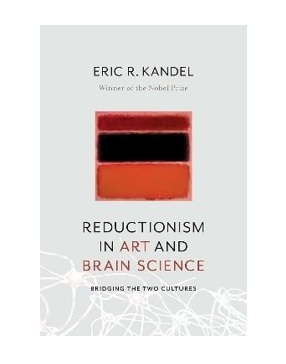
Written by neuroscientist and art fan Eric R. Kandel, this book explores the connection between science and the way we view art. Kandel includes scientific diagrams that show the neurochemical pathways involved during the process of evaluating an art piece. The book includes art works by artists such as Oscar-Claude Monet, Wassily Kandinsky, Andy Warhol and Mark Rothko, an American painter whose pieces are featured in the Philadelphia Museum of Art. This book is quite accessible for those who are not in scientific fields related to neurology, which is highly appreciated.
3. The Catalyst: RNA and the Quest to Unlock Life's Deepest Secrets by Thomas R. Cech
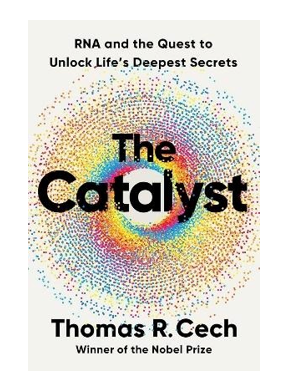
From the perspective of a biochemist, The Catalyst argues that RNA may be the key to understanding all life on Earth. This book details early experiments with RNA, as well as its current uses in the world of biotechnology. In this deep dive, Cech provides us with extraordinary insight into RNA, from its origins to cutting-edge modern RNA therapies.
4. Could bats help us fight the very diseases they give us? By Sarah Braner for C&EN
Could bats help us fight the very diseases they give us?
Bats are severely misunderstood and are demonized from fiction to news media. Bats carry diseases that can be transmitted to humans such as Ebola and SARS, but they themselves are resistant to these diseases. In this article, Braner summarizes publications on the topic of bat virus resistance and gives perspectives for how it might benefit humans.
5. Your Local Epidemiologist (YLE) Substack
Your Local Epidemiologist | Katelyn Jetelina | Substack
YLE is a Substack author of Substack run by a team of scientists who champion the dissemination of public health information with clear graphics and comprehensive research. Not only does the YLE team publish weekly reports of public health concerns across the country (i.e. respiratory viruses, food-borne outbreaks, etc.), they also tackle social media wellness trends and a wide range of public health policy. YLE’s commitment to providing clear information to the public stands strong against the backdrop of fading support for epidemiological surveillance.
6. The Backyard Bird Chronicles by Amy Tan
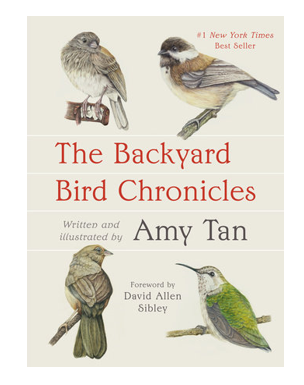
The Backyard Bird Chronicles, as its name suggests, documents Tan’s own observations and sketches of the birds in her backyard. Unlike any field guidebook, Tan’s deep-rooted affection for avians gushes out of every entry, capable of infecting anyone with a fledgling (pun intended) interest in birding. But Tan’s passion for birds extends beyond the simple capacity to identify them – almost every note she makes is an act of citizen science. She tracks the behavior of juvenile to adult birds, which birds prefer certain types of food, which species of birds return to her yard and at what times, and even undertakes her own experiment in slowly convincing ground-feeder birds to eat from a hanging feeder. At times, her questions border on the philosophical: do the birds recognize her or understand her position as their caretaker? Tan’s observations are a powerful example of the wonder and intrigue that can be found all around us, if only we choose to consider it.