In this 3-part series, I will explore the following main ideas of this conference: the collectivity of science, the intersection of science and policy, and the complexity of science communication. With some personal reflection on my takeaways from the meeting, I will delve into the interface of science and the public, and its implications for society as a whole.
Read moreEvent Recap: Milan Yager on Falling Out of Love with Science (video to come!)
by Erin K. Reagan
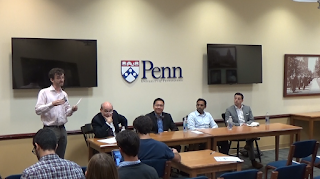
On November 28th, the Penn Science Policy and Diplomacy Group was thrilled to welcome distinguished speaker Milan Yager, the Executive Director of the American Institute for Medical and Biological Engineering, to the University of Pennsylvania. His topic: Falling Out of Love with Science-- Why Congress Doesn't Fund Medical Innovation. Attendees heard about all the many innovations we use every day which were only made possible through generous federal funding for scientific research, from GPS technology to the iPhone screen. Mr. Yager also discussed the divide between many American voters and the scientists toiling away in their labs, as well as how to bridge the gap between the two seemingly very different worlds. Spoiler alert: the key is seeing the humanity in all people and taking time to understand each person's circumstances before casting aspersions on their opinions of things that might matter greatly to YOU but not to them.
Mr. Yager concluded by issuing a challenge to the audience: become pen pals with your legislators. Email them, write them, go to their town halls and campaign events and bother them about the issues that matter to you, because if you don't, you will quickly learn the truth of what Senator Mike Enzi once famously said: "If you're not at the table, you're on the menu."
After concluding his remarks, Mr. Yager stuck around for a vigorous Q&A session which centered on topics such as the most effective methods for influencing your representatives, how to craft questions in town halls to push politicians to give you real answers, and how to best take advantage of tools and resources offered by institutions like AIMBE and the American Association for the Advancement of Science (AAAS). After the session, a small group of students was able to pick Mr. Yager's brain over lunch for advice and insight on how to make the biggest impact as a student still in training. Everyone enjoyed exchanging some great ideas, as well as sharing some excellent tacos.
Before he hopped back on a train to D.C., we were able to catch Mr. Yager for a quick interview. We'll be putting up the video of our interview soon, so stay tuned!
Podcast - Molly Sheehan: Bioengineer & PA Congressional Candidate
Primary elections are on May 15th, 2018
Opinion: Clearing the Air About Unenforceable Policies
A look back at last year, and plans for 2017-2018
To the Penn Community:
In the fast paced and changing world we live in it is now more important than ever for policymakers to rely on facts. Our current political climate has exposed the serious need for science informed policymaking and also the importance of maintaining and establishing collaborations with other countries. In the past year, the Penn Science Policy Group (PSPG) and the Penn Science Diplomacy Group (PSDG) have been organizing events to address this gap in our Penn and Philadelphia community. Our groups consist of graduate and undergraduate students, and postdoctoral fellows interested in learning about the intersections of science, government, and international relations. We have sought to educate the Penn community on the relationship between science and society, and to create an environment that provides scientists with the tools necessary to become effective science advocates. For these reasons, PSPG and PSDG established a strong collaboration which proved to be successful and launched us into the most productive year in the history of both groups and a year that changed for the better PSPG’s and PSDG’s future.
We organized social and career driven events, panel discussions, roundtable discussion groups, projects with various Embassies, a visit to Washington DC including the U.S. State Department, and the first ever Penn Science Policy and Diplomacy Symposium. The events we organized served to advance our groups overarching goals (described below).
- Encourage scientists to pursue careers in science policy, diplomacy, and politics. To this purpose we organized the following events:
- Career seminar with Dr. Christopher Yarosh, PSPG’s former Vice President, and the American Chemical Society Science Policy Fellow (2016-2017). Dr. Yarosh spoke about his career and the role of non-governmental organizations in science policy.
- Career seminar with Dr. Molly Sheehan, a Postdoctoral fellow in Bioengineering at Penn who is running for Pennsylvania’s 7th Congressional District seat. Dr. Sheehan spoke about her transition from academia into politics, the challenges of starting a campaign, and how scientists can get involved in politics.
- Inform scientists about policy implications.
- Roundtable discussion groups on science topics and their legal, ethical and social implications. The topics discussed in the past year included: Anonymous Peer Review and Reproducibility in Science, Training the Graduate Student Workforce, and the March for Science.
- Panel discussion in collaboration with 314 Action on “The importance of science-informed policy and lawmaking”. After the panel discussion, we also hosted a reception and book signing with Dr. Mann for his latest book, Madhouse Effect: How Climate Change Denial is Threatening Our Planet, Destroying Our Politics, and Driving Us Crazy.
- Panel discussion in partnership with the Earth and Environmental Science Department at Penn on the fate of domestic and international climate energy policies.
- Established partnerships with international organizations and embassies to execute diplomacy projects.
- Penn-Cuba partnership which seeks to develop a framework to allow the exchange of research and students between Penn and ICM in Cuba with the help of the American Association for the Advancement of Science (AAAS).
- Project with the Lithuania Consulate to help determine why Lithuania has one of the highest suicide rates in the world, this project allowed members to travel to Lithuania for interviews and field research.
- Latin America health policy evaluation, a project whose goal was to study how nutritional policies (i.e. sugar tax, food labeling) lead to changes in health indices in the region.
- Project with the Embassy of Philippines and Integrating Science in the Philippines to improve the access to science and innovation in the country, includes videoconferences, and sharing resources and materials.
- Spanish podcast, Caminos en Ciencia, which seeks to highlight the pathways Latin American scientists at Penn and other institutions have followed to become researchers.
- North Korea Project in partnership with Friends in Health have allowed PSDG members to attend medical conferences at Pyongyang University to present their research.
- Provide scientists with the tools to become better science advocates.
- Led efforts to transport students, postdocs, faculty members, and members of our Philadelphia community to attend the March for Science in Washington, DC.
- Organized a visit to Washington D.C. to attend the AAAS Science and Diplomacy one day conference. Presented posters on the projects described above.
- Organized a visit to the State Department and the Philippines Embassy.
- Organized the first Penn Science Policy and Diplomacy Symposium with a focus on science advocacy. This was a day-long event that included talks from guest speakers working in science policy and/or diplomacy, a career panel, and a workshop on science communication.
- Promote science communication by managing and producing content for a blog and podcast focused on science policy and diplomacy issues.
- Members of our Penn community are welcomed to write blog posts or participate in our podcast series to discuss science policy and/or diplomacy topics.
After a productive and successful year, the leaderships from both groups recognized and agreed that combining our efforts would work best, thus PSPG and PSDG have merged into one group. We formally introduce the Penn Science Policy and Diplomacy Group (PSPDG). It is PSPDG’s mission to continue efforts in organizing events to promote our goals, and to engage the larger scientific community at Penn and Philadelphia. We welcome everyone who is interested in our group to become a member and attend our future events. We look forward with excitement to the new year and our new group!
Sincerely,
Adrian Rivera-Reyes, Co-President
Enrique Lin Shiao, Co-President
Ian McLaughlin, Co-President
Podcast: Pipelines & Science Budgets
- https://primis.phmsa.dot.gov/comm/PipelineBasics.htm?nocache=2436
- https://primis.phmsa.dot.gov/comm/construction/index.htm?nocache=7276
- https://www.blm.gov/style/medialib/blm/wy/information/NEPA/cfodocs/greencore.Par.40103.File.dat/PODch3.pdf
- https://www.fractracker.org/2016/06/introduction-oil-gas-pipelines/
- https://motherboard.vice.com/en_us/article/dakota-access-pipeline-is-back-on-skipping-environmental-review
- https://www.fws.gov/Midwest/endangered/permits/hcp/nisource/2013NOA/pdf/NiSourceHCPfinalAppndxJ_HDD.pdf
- https://daplpipelinefacts.com/
- https://www.nigms.nih.gov/Research/CRCB/IDeA/Pages/default.aspx
- https://www.statnews.com/2017/03/28/budget-nih-cuts/
- http://www.sciencemag.org/news/2017/03/trumps-first-budget-analysis-and-reaction
- https://www.axios.com/trump-proposal-would-slash-nih-funding-this-year-2333226759.html
- https://www.bloomberg.com/politics/articles/2017-03-28/white-house-proposes-large-cuts-to-nih-research-grants-this-year?cmpid=socialflow-twitter-business&utm_content=business&utm_campaign=socialflow-organic&utm_source=twitter&utm_medium=social
- https://l.facebook.com/l.php?u=http%3A%2F%2Fwww.eenews.net%2Fassets%2F2017%2F03%2F28%2Fdocument_gw_06.pdf&h=ATOf0STgDeQf-QyRHoEzIUykBbplzcFQG6O6Ik_kbVXRhTyQVcqoOQuqFj_WZSe8Bl_By5Ue6Eb-ScNORf8YzAAMvFSSHLtwSO-SgFQHpevQd5YTEgYQNZ4KN0yz_8BS56QF98Dv_OndsK_nPeY
- http://www.sciencemag.org/news/2017/03/playing-no-trump-aaas-policy-forum
UPenn Scientists Are Investigating Better Treatments for Sarcoma Tumors
| Metastasizing tumor cells (pink) associated with collagen (blue). Image taken by Koreana Pak. |
The arguments for and against a graduate student union at Penn
Podcast: What is Science Diplomacy?
Podcast: Contacting Congress, 21st Century Cures, & Antibiotics
- Prevent infections,
- Increase awareness of antibiotic resistance and stewardship of antibiotics,
- Track infections that do occur, and
- Develop new drugs, diagnostics, and interventions
- Antibiotics don’t work on viral infections which cause common colds, flu, and the typical sore throat. Strep throat is a bacterial infection that doctors test for when they swab your throat. The CDC believes that at least 30% of the time12, antibiotics are prescribed unnecessarily or inappropriately; people have used them for infections they may have been able to recover from without the drugs and in some cases, antibiotics are prescribed when they would have no effect. If you are going to take antibiotics, make sure what you have is actually a bacterial infection.
- If you do have a bacterial infection, take the full course of antibiotics that you are prescribed. The earlier the mutant bacteria are exposed to the antibiotics, the more likely they are to still respond, and the timeline and doses are carefully designed to kill as many as possible, even if your noticeable symptoms are gone. The earlier you stop taking the medication, the larger the population of bacteria that survives the first does.
- On a day-to-day basis, don’t use antibacterial or antimicrobial soaps. According to the FDA, antibacterial soap is no more likely to prevent infections than regular soap, and the antibacterial additives also contribute to antibiotic resistance. This is not relevant with alcohol based hand sanitizers, but generally speaking, regularly washing your hands with normal soap and water is sufficient and effective at preventing infections otherwise spread by contact.
References:
Event Recap: Intellectual Property Panel “From Research to Patent”
Event Recap: Anonymous Peer Review & PubPeer
PubPeer has been involved in fostering investigations of several scandals in science. Some examples include a critical evaluation of papers published in Nature 2014 entitled Stimulus-triggered fate conversion of somatic cells into pluripotency [1]. The paper described a novel mechanism by which pluripotency might be induced by manipulating the pH environments of somatic cells. However, following publication, concerns regarding the scientific integrity of published experiments were raised, resulting in the retraction of both papers and an institutional investigation.
Subsequently, the publications of a prolific cancer researcher received attention on PubPeer, ultimately resulting in the rescission of a prestigious position at a new institution eleven days before the start date due, at least in part, to PubPeer commenters contacting faculty at the institution. When trying to return the professor’s former position, it was no longer available. The professor then sued PubPeer commenters, arguing that the site must identify the commenters that have prevented a continued career in science. PubPeer, advised by lawyers from the ACLU working pro-bono, is refusing to comply – and enjoy the support of both Google and Twitter, both of which have filed a court brief in defense of the website [2].
Arguably at its best, PubPeer ostensibly fulfills an unmet, or poorly-met, need in the science publication process. Our discussion group felt that the goal of PubPeer is one that the peer review process is meant to pursue, but occasionally falls short of accomplishing. While increased vigilance is welcome, and bad science – or intentionally misleading figures – should certainly not be published, perhaps the popularity and activity on PubPeer reveals a correctable problem in the review process rather than a fundamental flaw. While the discussion group didn’t focus specifically on problems with the current peer review process – a topic deserving its own discussion [3] – the group felt that there were opportunities to improve the process, and was ambivalent that a platform like PubPeer is sufficiently moderated, vetted, and transparent in the right ways to be an optimal means to this end.
Some ideas proposed by discussion participants were to make the peer-review process more transparent, with increased visibility applied to the reasons a manuscript is or is not published. Additionally, peer-review often relies upon the input of just a handful of volunteer experts, all of whom are frequently under time constraints that can jeopardize their abilities to thoroughly evaluate manuscripts – occasionally resulting in the assignment of peer review to members of related, though not optimally relevant, fields [4]. Some discussion participants highlighted that a democratized review process, similar to that of PubPeer, may indeed alleviate some of these problems with the requirement that commenters be moderated to ensure they have relevant expertise. Alternatively, some discussion participants argued, given the role of gate-keeper played by journals, often determining the career trajectories of aspiring scientists, the onus is on Journals’ editorial staffs to render peer review more effective. Finally, another concept discussed was to layer a 3rd party moderation mechanism on top of a platform like PubPeer, ensuring comments are objective, constructive, and unbiased.
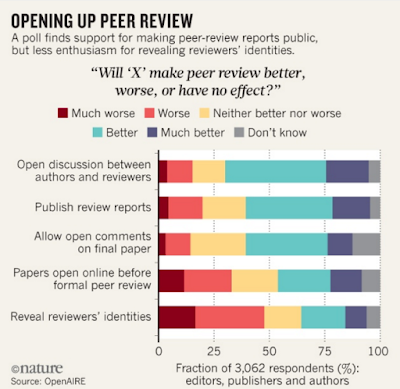
The concept of a more open peer review is one that many scientists are beginning to seriously consider. In Nature News, Ewen Callaway reported that 60% of the authors in Nature Communications agreed to have publication reviews published [7]. However, while a majority of responders to a survey funded by the European Commission believed that open peer review ought to become more routine, not all strategies of open peer review received equivalent support.
Ultimately, the group unanimously felt that the popularity of PubPeer ought to be a signal to the scientific community that something is wrong with the publication process that requires our attention with potentially destructive ramifications [5]. Every time a significantly flawed article is published, damage is done to the perception of science and the scientific community, and at a time when the scientific community still enjoys broadly positive public perception [6], now is likely an opportune time to reconsider the peer-review process – and perhaps learn some lessons that an anonymous post-publication website like PubPeer might teach us.
1) PubPeer - Stimulus-triggered fate conversion of somatic cells into pluripotency. (n.d.). Retrieved November 25, 2016, from https://pubpeer.com/publications/8B755710BADFE6FB0A848A44B70F7D
2) Brief of Amici Curiae Google Inc. and Twitter Inc. in Support of PubPeer, LLC. (Michigan Court of Appeals). https://pubpeer.com/Google_Twitter_Brief.pdf
3) Balietti, S. (2016). Science Is Suffering Because of Peer Review’s Big Problems. Retrieved November 25, 2016, from https://newrepublic.com/article/135921/science-suffering-peer-reviews-big-problems
4)Arns M. Open access is tiring out peer reviewers. Nature. 2014 Nov 27;515(7528):467. doi: 10.1038/515467a. PubMed PMID: 25428463.
5) Jha, Alok. (2012). False positives: Fraud and misconduct are threatening scientific research. Retrieved November 25, 2016, from https://www.theguardian.com/science/2012/sep/13/scientific-research-fraud-bad-practice
6) Hayden, E. C. (2015, January 29). Survey finds US public still supports science. Retrieved November 25, 2016, from http://www.nature.com/news/survey-finds-us-public-still-supports-science-1.16818
7) Callaway E. Open peer review finds more takers. Nature. 2016 Nov 10;539(7629):343. doi: 10.1038/nature.2016.20969. PubMed PMID: 27853233
Tracing the ancestry and migration of HIV/AIDS in America
Event Recap: The Importance of Science-Informed Policy & Law Making
The event began with personal introductions, with each member characterizing their unique perspectives and personal histories. Shaughnessy Naughton highlighted the scarcity of legislators with backgrounds in math and science as a primary motivator for encouraging people with science backgrounds to get involved beyond just advocacy.
Dr. Andrew Zwicker, having previously run for office in the US House of Representatives, ultimately was successful in his run for the state assembly in an extremely tight race, winning by just 78 votes, or 0.2456% – a level of precision that he’s been told would only be spoken by a scientist, as most would simplify the value to a quarter of a percent. He credited two primary features of his campaign as contributing to his success. First, on a practical level, he utilized a more sophisticated voter model. As the first Democrat ever elected to his district in its 42 years[1], it was critical to optimally allocate resources to effectively communicate his message. Second, he identified his background in science as a strength. When campaigning, he made it clear that he’d ensure facts would guide his decisions – and his constituents found that pragmatism appealing.
Next, Dr. Michael Mann summarized his pathway to prominence in the climate change debate by recounting the political fallout that occurred following the publication of his now famous “hockey-stick graph”[2]. In short, the graph depicts that average global temperatures had been fairly stable until 1900 (forming the shaft of the hockey stick), at which point a sharp rise in temperature begins (forming the blade). In articulating why exactly this publication made such a splash, he highlighted the simplicity of the graph. It summarizes what is otherwise fairly esoteric data in a way that’s accessible to non-scientists. “You don’t have to understand the complex physics to understand what the graph was saying: there’s something unprecedented taking place today, and, by implication, probably has something to do with what we’re doing.” After its publication, he was in for a whirlwind. The graph became iconic in the climate change debate, provoking the ire of special interests who then pursued a strategy to personally discredit Mann.
Naughton initiated the conversation by asking Zwicker if his background in science has influenced what he’s been able to accomplish in his past 9 months of public office. While at times it has given him credibility and garnered trust among his peers and constituents, the nature of science is often incongruous with politics: rather than relying solely on facts, politics requires emotional and personal appeals to get things done. A specific example: the fear of jobs being lost due to legislation, particularly reforms focused on energy and climate change, oftentimes obscures what would otherwise be a less volatile debate.
Naughton then asked Mann to describe his experience with Ken Cuccinelli, the former Attorney General (AG) of Virginia under former governor Bob McDonnell. One of the former AG’s priorities was to target the Environmental Protection Agency’s ability to regulate greenhouse gas emissions, as well as demand the University of Virginia – the institution where Dr. Mann had been an assistant professor from 1999 to 2005 – to provide a sweeping compilation of documents associated with Dr. Mann. Cuccinelli was relying upon the 2002 Virginia Fraud Against Taxpayers Act, devised to enable the AG to ferret out state waste and fraud, to serve the civil investigative demand. Ultimately, Cuccinelli’s case was rejected, and has since been considered a major victory to the integrity of academic research and scientists’ privacy.
The panel then invited questions from attendees, which ranged from technical inquiries of how climate estimates were made for the Hockey Stick Curve to perspectives on policy & science communication.
One question focused on the public’s ability to digest and think critically about scientific knowledge – highlighting that organizations and institutions like AAAS and the NSF regularly require funded investigators to spend time communicating their research to a broader audience. However, the relationship between the public and science remains tenuous. Zwicker responded by identifying a critical difference in efficacy between the beautiful images and data from NASA or press releases and the personal experiences of people outside of science. Special interest groups can disseminate opinions and perspectives that don’t comport with the scientific consensus, and without truly effective science communication, the public simply can’t know whom to trust. He argued that scientists do remain a broadly trusted group, but without competent efforts to communicate the best science, it remains a major challenge. Ultimately, the solution involves a focus on early education and teaching critical thinking skills.
Moreover, Mann commented on a problematic fallacy that arises from a misunderstanding of how science works: “there’s a fallacy that because we don’t know something, we know nothing. And that’s obviously incorrect.” There are many issues at the forefront of science that remain to be understood, but that forefront exists because of relevant established knowledge. “We know greenhouse gasses warm the planet, and it’ll warm more if we continue burning carbon. There’s still uncertainty with gravity. We haven’t reconciled quantum mechanics with general relativity. Just because we haven’t reconciled all of the forces, and there’s still something to be learned about gravity at certain scales – we still understand that if we jump out the window, we’ll plummet to our deaths.”
Naughton suggested that much of this disconnect between scientific knowledge and public sentiment comes down to communication. “For many scientists, it’s very difficult to communicate very complex processes and theories in a language that people can understand. As scientists, you want to be truthful and honest. You don’t learn everything about quantum mechanics in your first year of physics; by not explaining everything, that doesn’t mean you’re being dishonest.”
Zwicker highlighted that there aren’t many prominent science communicators, asking the audience to name as many as they could. Then, he asked if we could name prominent female science communicators, which proved more difficult for the audience. There isn’t necessarily a simple solution to this obvious problem, given the influence of special interests and concerns of profitability.
An audience member then asked whether the panelists considered nuclear energy a viable alternative – and, in particular “warehouse-ready nuclear”, which describes small modular reactors that operate on a much smaller scale than the massive reactors to which we’ve become accustomed. Zwicker, as a physicist, expressed skepticism: “You’ll notice there are no small reactors anywhere in the world. By the time you build a reactor and get through the regulation – and we’re talking 10-30 years to be completed – we’re still far away from them being economically viable.” He also noted that he’s encountered the argument that investment allocation matters to the success of a given technology, and that investment in one sustainable energy platform may delay progress in others. The audience then asked about the panel’s perspectives on natural gas, which is characterized by some as a bridge fuel to a lower carbon-emitting future energy source. Summarizing his perspective on natural gas, Mann argued “a fossil fuel ultimately can’t be the solution to a problem caused by fossil fuels.”
Jamie DeNizio, a member of PSPG, asked if the panel thought coalitions between state and local governments could be an effective strategy to get around current barriers at the national level. Naughton noted that this is ultimately the goal behind the federal Clean Power Plan, with goals tailored to specific states for cutting carbon output. Mann, highlighting the prevalent lack of acceptance of climate change at the federal level, suggested that the examples of state consortia that currently exist – like The Regional Greenhouse Gas Initiative (RGGI) in New England, or the Pacific Coast Collaborative (PCC) on the West Coast – are causes for optimism, indicating that progress can be made despite gridlock at the federal level. Zwicker noted that New Jersey’s participation in trading carbon credits had resulted in substantial revenue, as New Jersey was able to bring in funds to build a new hospital. He suggested that Governor Chris Christie’s decision to withdraw from RGGI was imprudent, and the New York Times noted that, in 2011, New Jersey had received over $100 million in revenue from RGGI[3].
Another issue that was brought up by the panel was how counterproductive infighting among environmentalists and climate change activists can be to the overall effort. In particular, this splintering enables critics to portray climate change as broadly incoherent, rendering the data and proposals less convincing to skeptics of anthropogenic climate change.
Adrian Rivera, also a PSPG member, asked the panel to comment on whether they felt social media is an effective strategy to communicate science to the general public. Mann stated that scientist that do not engage on social media are not being as effective as they can be, mostly because there is a growing subset of the population that derives information via social media platforms. In contrast, Zwicker highlighted the lack of depth on social media, and that some issues simply require more in-depth discussion than social media tends to accommodate. Importantly, Zwicker emphasized the importance and value of face-to-face communication. Naughton then brought this point to a specific example of poor science communication translating into tangible problems. “It’s not all about policy or NIH/NSF funding. It’s about making sure evolution is being taught in public schools.” She noted the experience of a botany professor in Susquehanna, PA, who was holding an info-session on biology for high-school teachers. One of the attending high-school teachers told him that he was brave for teaching evolution in school, which Naughton identified as an example of ineffective science communication.
Finally, an environmental activist in the audience noted that a major problem he’d observed in his own approach to advocacy was that he was often speaking through feelings of anger rather than positive terms. Mann thoroughly agreed, and noted that “there’s a danger when we approach from doom and gloom. This takes us to the wrong place; it becomes an excuse for inaction, and it actually has been co-opted by the forces of denial. It is important to communicate that there is urgency in confronting this problem [climate change] – but that we can do it, and have a more prosperous planet for our children and grandchildren. It’s critical to communicate that. If you don’t provide a path forward, you’re leading people in the wrong direction.”
New Research shows how to make Human Stem Cell Lines divide equally
Event Recap: Dr. Sarah Rhodes, Health Science Policy Analyst
- Coordinating NIH’s response to a directive from the President’s Office of Science and Technology Policy related to scientific collections (think preserved specimens and the like)
- Managing the placement of AAAS S&T Fellows at NIH
- Supporting the Scientific Management Review Board, which advises the NIH Director
- Preparing for NIH’s appropriations hearings and responding to Congressional follow-ups
- “Whatever fires needs to be put out”
Event Recap: Dr. Sarah Martin, ASBMB Science Policy Fellow
- Research- tracking new legislation, and a daily diet of articles regarding new developments in science and policy
- Meetings- with legislators on Capitol Hill, staff at the NIH, partner organizations such as the Federation of American Societies for Experimental Biology (FASEB), and others
- Writing- white papers, position statements, and blog posts on everything from ASBMB’s position on gene editing to the NIH Strategic Plan for FY 2016-2020
- Administration- organizing and preparing for meetings, composing executive summaries, and helping to plan and organize ASBMB’s Hill Day.
- ‘I didn’t even know what skills I needed for a career inscience policy’
- ‘A day in the life of the ASBMB science policy fellow’
- ‘The skills you need for a career in science policy’
WHO says bacon causes cancer?
Note: Here at the PSPG blog, we like to feature writing from anyone in the Penn community interested in the science policy process or science for general interest. This is the 1st in a series of posts from new authors. Interested is writing for the blog? Contact us!
- Group 1 – There is convincing evidence linking the agent to cancer in humans. The agent is deemed carcinogenic.
- Group 2A – There is sufficient evidence of cancer in animal models, and there is a positive association observed in humans. However, the evidence in humans does not exclude the possibility of bias, chance, or confounding variables. The agent is deemed as a probable carcinogen.
- Group 2B – There is a positive association in humans, but the possibility of bias, chance, or confounding variables cannot be excluded. There is inadequate evidence in animal models.
- This category is also used when there is sufficient evidence of cancer in animal models, but there is not an association observed in humans. The agent is a possible carcinogen.
- Group 3 – There is inadequate evidence in humans and animals. The agent cannot be classified as carcinogenic or not carcinogenic.
- Group 4 – There is sufficient evidence to conclude that the agent is not carcinogenic in humans or in animals.